
AI Tools for Data Protection Officers (AI4DPO)
A practical course on automating the work of data privacy, legal, and InfoSec professionals using AI.
We teach you how to properly use generative AI, build your own automations with various tools, and provide ready-made templates for RoPA, LIA, and other procedures.
- October 12 → November 4
- 8 live sessions × 2 hours (theory / practice alternating)
- Monday & Wednesday, 4:00–6:00 PM (CET)
- 599 €
- Electronic certificate via Accredible
- Practical exercises, group work on the final project

AI can't replace DPO, legal and other experts
But it can make their work less routine and free up space for strategic decisions.
Here’s how your work can change after the course.
Before the course
After the course
Before the course

After the course
Use ChatGPT / Claude to regenerate legal clauses based on local legislation using prompt engineering.
Before the course
After the course
Generate auto-filled LIA (Legitimate Interest Assessment) drafts using OS4DPO in Notion based on your existing data.
Before the course
After the course
Using NotebookLM, specialists create infographics or podcasts based on their own materials — 100% confident the information is accurate.
Before the course
After the course
After the course, privacy specialists create their own privacy policy template with the needed functionality in Claude and hand off ready-made HTML for implementation.
Before the course
After the course
Build response workflows in N8N to handle data breach alerts, log collection, and escalation.

We know what we’re talking about
Our team automates diverse processes with AI: from analyzing feedback to improve services to scraping news about data privacy and related fields to stay current.
The founder of Data Privacy Office Europe and trainer of the AI Tools for DPO course Siarhei Varankevich is an AI enthusiast dedicated to enhancing the company’s internal workflows and equipping our consultants with valuable AI tools for client projects.
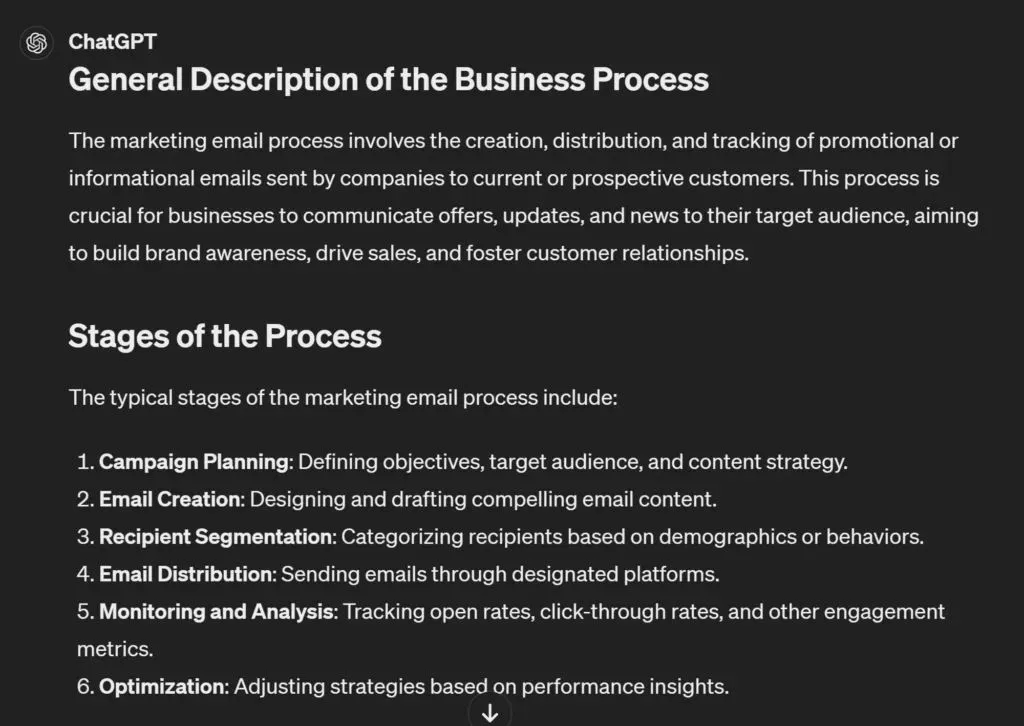
Filling RoPA with Chat GPT
This article shows how AI can quickly and efficiently create a Record of Processing Activities (RoPA) that meets GDPR requirements.
Automized LIA generator
The AI tool that automatically generates LIA reports in Notion, using survey responses and the ICO template.
Experience Our AI Prompts Today
Curious about how AI can simplify your workload? Download our free guide to test-drive the expert templates we’ve developed for this course. You’ll get ready-to-use prompts for RoPA, GDPR notices, and legal translations, all crafted by our team.
Grab your free copy and start transforming routine into strategy!
What you’ll get after the course?
Routine Work Reduction
Automation Potential
Routine Work Reduction
Proven Performance
Try AI4DPO for yourself
Discover where you are with AI, then explore a sample lesson.
Explore a sample lesson
Course details
- Live online sessions with trainers
- 4 weeks
- Monday & Wednesday, 4:00–6:00 PM (CET)
- Group work on the final project
- Miro, Notion, MS Teams
- Electronic certificate via Accredible
Program
Module 1: AI Foundations, Mindset, and Data Security
What is it about?
Understanding the fundamental concepts of Large Language Models (LLMs), Tokenization, and Vectorization/Embeddings. Students will learn to critically assess security and privacy risks and identify potential contextual mismatches between the LLM’s general training data and specific DPO requirements.
Tools We Will Master
- TensorFlow Embedding Projector — a visualization tool that allowes users to investigate how AI perceives the relationships and meanings between different words based on its large training dataset.
- Foundational LLMs inside ChatGPT and Claude.
Acquired Competencies
- Ability to critically evaluate AI outputs for accuracy and recognize their limitations.
- Understanding how AI operates within “information bubbles” and why providing specific context is essential to overcome the AI’s default generalized knowledge.
- Identifying common contextual mismatches in privacy work (such as jurisdictional differences, timeline inconsistencies, role confusion, and data scope errors) and understand how these misalignments emerge when AI applies generalized knowledge to specialized data protection cases.
Module 2: Prompt&Context Engineering Mastery
What is it about?
Crafting precise instructions and providing relevant background information that guide AI to produce accurate, relevant, and well-structured outputs. It teaches you to communicate with AI much like writing code, where each word choice and context element significantly influences the quality of results.
Acquired Competencies
- Developing advanced delegation techniques for working with AI.
- Creating deterministic prompts that consistently deliver reliable results.
- Refining interpersonal communication by adjusting tone through AI assistance.
- Ensuring legal accuracy by requiring source citations.
- Determining when to use RAG versus general search. Transform general LLMs into specialized research assistants.
Module 3: Grounded Research (RAG) and Hallucination Control
What is it about?
Mastering the Retrieval-Augmented Generation (RAG) method, which enables AI to use a curated, trusted knowledge base (uploaded documents) instead of relying on general training data. Learning practical techniques to mitigate hallucinations, including requesting evidence and adjusting AI parameters.
Tools We Will Master
- Skill Synthesis — working with skills in Claude and Notion, plus Codex / ChatGPT.
- ChatGPT Custom GPTs/Projects.
- Google NotebookLM for strict, grounded RAG research.
- Dedicated document repositories for sourcing high-quality knowledge.
Acquired Competencies
- Designing effective research strategies grounded in trusted sources. Learn to rely on specialized legal references rather than general AI knowledge for critical analysis.
- Curating sources with authority tiers and freshness windows; prioritize primary legal texts and official guidance.
- Enforcing context minimization by injecting only the most relevant passages, requiring citations and quote-bounded evidence.
Module 4: Automation of DPO Workflows (No-Code Systems)
What is it about?
Transitioning from single prompts to designing reusable prompt templates using variables and automating repetitive DPO tasks (RoPA, DSAR, policy drafting) in no-code environments.
Tools We Will Master
- Notion Databases and AI Properties for RoPA automation and document drafting.
- Custom GPTs saving complex prompts as reusable “assistants”.
- N8N as an automation tool.
Acquired Competencies
- Mastering the skills of an AI Workflow Architect by learning to structure digital tasks efficiently, transform static variables into interactive AI features, and design cohesive multi-step document generation processes.
Workshops: Advanced Architectures, Agents and Workflow Integrations
Hands-on practice is not a separate, stand-alone module — it’s distributed across the workshops, with one workshop paired to each lecture throughout the course. Most of the practical work happens in Notion, including our DPO Wiki and OS4DPO tools, where you apply what you’ve just learned to real DPO scenarios. Attending workshops live is optional, but completing the exercises on the AI4DPO platform is required to receive your certificate.
Workshops also cover complex AI architectures, including Multi-Agent Systems (where agents verify each other’s work) and deep RAG architectures, along with organizational AI strategy and high-level confidentiality risks related to provider reuse of data.
Important: Basic software skills are required to participate in this course as we will explore advanced technologies during the training.
Schedule
- October 12 → November 4

Group & corporate discounts
- 2 participants — 5 % off
- 3-4 participants — 10 % off
- 5+ participants — 20 % off
* Discounts are not combined with the Loyalty Program discounts.
That’s what our clients say about our courses
Privacy Officer
I had seen many courses on AI for other industries, but none specifically for data protection. When I found this course, it was a real eye-opener. Additionally, the course doesn’t just focus on the benefits of AI but also addresses its risks, providing valuable insights on how to use AI safely and effectively in our field.
Learn more…
Learn more…
Senior Data Protection Consultant
AI4DPO turned out to be the most hands-on course I’ve taken in recent years. There was no unnecessary theory, it was all about practical application. The best part for me was learning how to use AI for report generation and checking policies for GDPR compliance. Siarhei deserves special mention since he doesn’t just teach, he shows you how a professional thinks when combining legal expertise with technology.
Learn more…
Learn more…
Data Privacy Officer
Everything Siarhei covered was focused on practical application: how to use the tools, how to write effective prompts, and where automation really makes a difference. Some parts were challenging, especially if you’ve never worked with integrations, but after a few tries, it all clicked. I’ve already automated part of my reporting process and saved a ton of time.
Learn more…
Learn more…
Compliance Manager
I’m not a techie, and honestly, I was worried that the course would be overloaded with complicated tools. The n8n module was definitely the hardest part, but Siarhey explained everything step by step, and eventually, it all clicked. Otherwise, everything was fantastic — lots of concrete case studies, real-world examples of how to apply AI in tasks like DPIA analysis and handling subject access requests.
Learn more…
Learn more…
DPO Consultant
I really enjoyed this course. It showed me how to integrate AI into the daily tasks. Siarhei explains everything clearly and with humor, and it’s obvious that he has extensive experience in consulting. The practical examples were particularly valuable. The course provided a solid foundation and practical insights into how AI can be used in everyday work, which I’m excited to start implementing as I move forward.
Learn more…
Learn more…

Your loyalty discount grows with every course
Join the our Loyalty Program where your discount grows with every purchase: 4% → 12% → 20% and never resets.
Learn with experts

Siarhei Varankevich
CIPP/E, CIPM, CIPT, MBA, FIP
Siarhei Varankevich FIP is the founder of the international data protection consultancy, Data Privacy Office. He provides consultation on the European GDPR and Emirati PDPL. He is the author and instructor of GDPR DPP, GDPR DPM, and UAE DPO data protection training courses. He is a certified professional (CIPP/E), manager (CIPM), and technologist (CIPT) in information privacy. Siarhei is also the chief editor of GDPR-Text.com, an online guide to the EU General Data Protection Regulation.

Elena Aliseychik
GDPR DPP, GDPR DPT, GDPR DPM, CIPP/E, AIGP
Elena Aliseychik is a certified privacy professional (CIPP/E) and IBM-certified Data Scientist. Currently pursuing a second degree in Data Science and Artificial Intelligence in Germany, Elena has a legal background that complements her practical experience in consulting AI-driven companies.
Ready to Enroll?
Enrolment and payment are handled on the original DPO Europe course website. Individual clients retain the stated statutory 14-day right of withdrawal from the date of payment.
Have specific questions about the curriculum or need a formal proposal for your organization? You can apply by request. Our team will reach out to discuss your professional goals and provide a customized offer. Once the details are finalized, we will manually guide you through the registration process.
Bonus materials





Frequently Asked Questions
What is AI-based compliance tool for data protection?
AI tools for data privacy compliance are software solutions that leverage AI technologies to help organizations comply with privacy regulations like General Data Protection Regulation (GDPR). They facilitate the management of sensitive data and automate compliance tasks. AI is designed to enhance efficiency, and compliance work, which often involves routine and repetitive tasks, is highly susceptible to automation.
Will compliance experts be replaced by AI?
Use of AI tools will not replace the human role in compliance, legal judgment, or professional work, but it will fundamentally transform it. While AI is capable of automating and amplifying human abilities to an unprecedented degree (often 2x, 5x, or 10x better), the core responsibility and application of judgment remain with the human professional.
How do AI systems ensure compliance with privacy regulations?
AI offers ensuring compliance primarily by controlling data input and output to mitigate privacy risks. This is achieved through security features like commercial API licenses, which prohibit AI providers (such as OpenAI and Microsoft) from training models on user data, preventing the use of confidential information for service improvement. To reduce reliance on external providers, companies can choose on-premise deployment of open-source models, ensuring personal data remains securely within the company’s control, thereby significantly reducing compliance burdens like Transfer Impact Assessments (TIAs). Furthermore, AI tools reduce inaccuracy risks through Retrieval-Augmented Generation (RAG), a technique that forces the model to ground its analysis in verified, trusted documents (like EDPB guidance) provided by the privacy professional, rather than relying on general, error-prone internet training data.
What is the role of EU AI Act and AI Governance in data privacy?
AI governance is crucial for ensuring that the use of these powerful tools aligns with professional and ethical duties, especially concerning client data. It mandates that law firms establish clear policies and guidelines on acceptable AI use to prevent the disclosure of proprietary and confidential information, which is a significant organizational risk. Furthermore, governance requires lawyers to uphold their duty of competence by developing a reasonable understanding of the capabilities and limitations of specific AI tools, including potential risks like hallucinations. Oversight is necessary to manage risks related to data security breaches, bias, and the use of cloud services, which can expose data to third parties. Finally, managerial lawyers must provide comprehensive training for staff on ethical practices and ensure that all personnel adhere to policies governing approved tools and security protocols.
What are some compliance solutions offered by AI tools?
AI tools offer privacy management solutions by automating time-consuming and repetitive tasks, thus significantly increasing efficiency. Specifically, AI can draft and review complex documents, such as legal contracts, privacy clauses, and Data Processing Agreements (DPAs), flagging potential risks or anomalies regarding legal adherence. AI can also generate the foundation for internal privacy documentation, like purpose statements for Records of Processing Activities (RoPAs) or drafts of Legitimate Interests Assessments (LIAs), acting as a solid first draft. Advanced tools leverage custom knowledge bases, allowing them to perform controlled legal research grounded only in specific authoritative sources, such as EDPB guidelines, provided by the user. By rapidly transforming or summarizing lengthy texts, AI models enhance the comprehensibility of complex legal information for professionals.
What are the benefits of using AI model for personal data protection?
The primary benefit of using AI for data privacy compliance is the enhancement of professional efficiency and speed in tasks like document review and legal analysis. AI can amplify a professional’s potential, allowing compliance teams to focus their expertise on higher-value strategy and creative problem-solving rather than mundane, routine tasks. This automation generally leads to improved accuracy in legal analysis and the early identification of risks within contracts or organizational processes. By streamlining documentation like Privacy Notices and RoPAs, AI helps under-resourced teams meet legal obligations more consistently and thoroughly. Ultimately, leveraging these tools enables legal professionals to serve clients and adapt to the ever-increasing volume of data that must be processed.